Mini black currant custard pączki made with brioche, homemade custard, black currant preserves, and a simple glaze.
This post may contain affiliate links, please read the privacy policy for details.
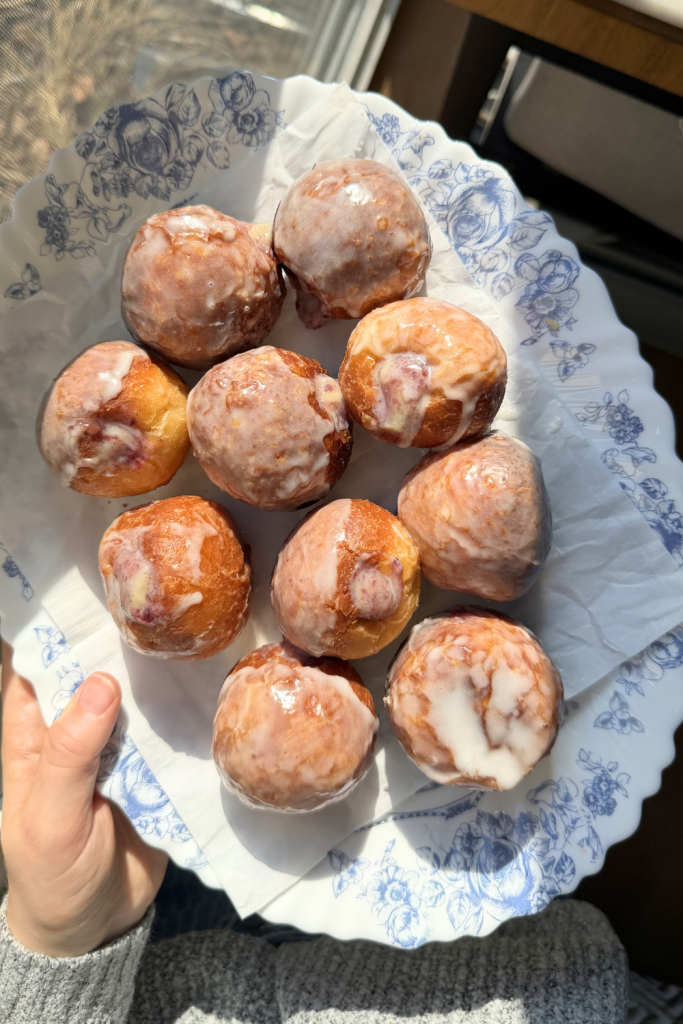
mini black currant custard pączki
Hello hello! ☺︎ I’m really excited to share this recipe today because I love pączki. Fat Tuesday is right around the corner which is when bakeries like to make and sell pączki most often here in the U.S., but if you’re like me and want them year-round and you’re not in Poland, this recipe is perfect for you. We’ve got a super light and fluffy brioche dough that we’re filling with a homemade vanilla custard as well as some black currant preserves, and then it’s all finished off with a light glaze. They’re super soft, light in flavor, super delish, and of course, mini & small batch. So let’s get into it! ☺︎
what are pączki?
Pączki [punch-key] are Polish donuts that are made with an enriched dough like brioche. This means that they contain more eggs and butter than the standard donut you might find at many of the chain donut shops in the U.S. (so basically, they’re more delicious!) Traditionally, they are filled with rose petal jam or plum jam, but here in the U.S. you can find them filled with pretty much any fruit or cream filling. In Poland, they’re enjoyed on Fat Thursday, while here, you’ll typically enjoy them on Fat Tuesday!
expert baking tips
Weigh your ingredients:
My recipes are all written in grams because it is the most accurate way to bake. When you use a kitchen scale, you ensure that your baked goods turn out as close to the written recipe as possible. Plus, the cleanup is way easier when using a scale! I will provide standard cup measurements but please note that I have not tested the recipe using cup measurements and therefore can not guarantee your recipe will come out how mine did. Here is my favorite kitchen scale.
Use room temperature ingredients:
It’s important that your ingredients are at room temperature so that they can easily incorporate with each other. Take out your cold ingredients about an hour before you’ll need them.
the dough will take a while to knead
Kneading this dough will take a longer time than you are probably used to. This dough is enriched with eggs and butter which makes it take longer for the proper amount of gluten to develop. Kneading in the mixer can take me anywhere from 10-20 minutes. The dough is ready to be used when it passes the windowpane test and has pulled away from the sides and bottom of the bowl. If you are weighing your ingredients, just trust the process! If you are using cup measurements and the dough just is not coming together after 15 minutes, try adding in 1 tbsp. of flour at a time.
be careful heating the milk
Heating the milk is important for bringing the yeast to an optimal temperature for rising. The milk should be heated to ~100°F / 38°C but it does not have to be exact. As long as the milk is between 95°F – 110°F, it is good to be used. If the temperature exceeds 110°F, wait for it to cool down before using so that you do not kill the yeast!
how to tell your dough is done kneading: the windowpane test
The windowpane test is (in my opinion) the best way to tell that your dough has been properly kneaded. Once the dough starts to pull away from the sides and the bottom of the mixing bowl, it is most likely ready. However, just to be sure that it’s good to go I check if it passes the windowpane test. To do that, take some of the dough in your hands and start to slowly stretch it out. If it can get thin enough to where light passes through it before tearing, then it’s good to go! If not, keep kneading until it does!
for the best custard
Be sure to constantly whisk the eggs while slowly streaming in the hot milk to avoid scrambling the eggs.
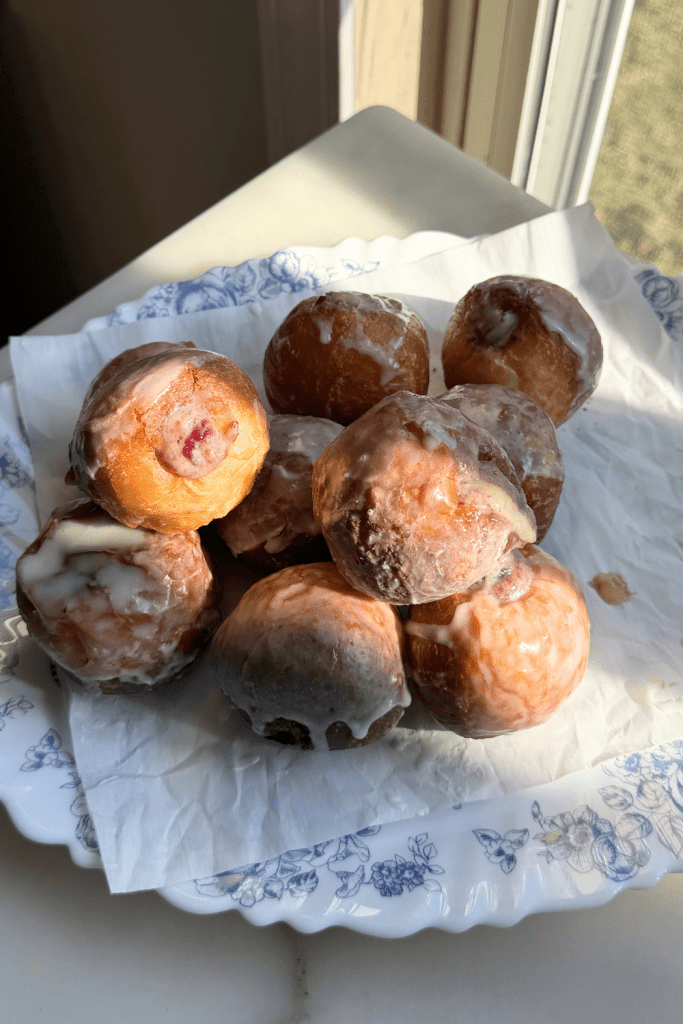
ingredients for mini pączki:
Brioche donuts:
- Bread flour: for structure and chewiness. I recommend using bread flour because it has more protein which gives you a chewier, fluffier donut. You can use all purpose flour in it’s place, but please be sure that you are using a high-quality flour that has a high protein %, such as King Arthur (11.7%) so that your gluten will develop. If you’re using a low protein flour, the gluten will not develop enough and you will have to add a lot more flour to the brioche, which will alter the dough!
- Active dry yeast: for making the dough rise. You can easily substitute in instant yeast if that is what you have on hand. You will just skip the step of combining the warm milk, sugar, and yeast!
- Salt: for balancing and bringing out the sweetness of the brioche. Salt also “controls” the yeast to make sure that it does not overly expand.
- Granulated sugar: for sweetening the brioche and for helping the yeast with rising. We’ll also coat the donuts in some granulated sugar.
- Egg: for binding and adding moisture.
- Unsalted butter: for tenderizing the brioche rolls and giving them a buttery, melt-in-your-mouth feel. I would not recommend substituting in salted butter since salt is important to controlling yeast growth and the amount of salt in salted butter is quite variable.
- Whole milk: for tenderizing and hydrating the dough. Whole milk will provide the softest rolls because the extra fat helps tenderize the dough. You can however swap in 1%, 2% or your favorite non dairy milk alternative! Just note that the dough may be a little less soft and fluffy due to the varying fat content.
vanilla custard / filling:
- Granulated sugar: for sweetness.
- Salt: to balance and bring out the flavor of the custard.
- Egg yolks: for richness and to thicken up the custard.
- Corn starch: to thicken up the custard.
- Whole milk: for richness and for a creamy texture.
- Vanilla: for flavor – vanilla bean paste or vanilla extract will work perfectly.
- Unsalted butter: makes the custard glossy. You can use salted butter here with no need to reduce the amount of salt you add in.
- Black currant preserves: or black currant jam, or your favorite preserves or jam.
glaze:
- Powdered sugar: the base of the glaze.
- Whole milk: or your favorite milk alternative, to thin out the glaze. If you happen to have black currant juice on hand that would be a great sub here to amp up the black currant flavor.
how to make mini black currant custard pączki:
Here are some of the photos of the process of making these donuts. The full recipe is at the end of this blog post!


- Make the dough and let it rise in a warm environment until it doubles in size.
- Make the custard while the dough is rising.
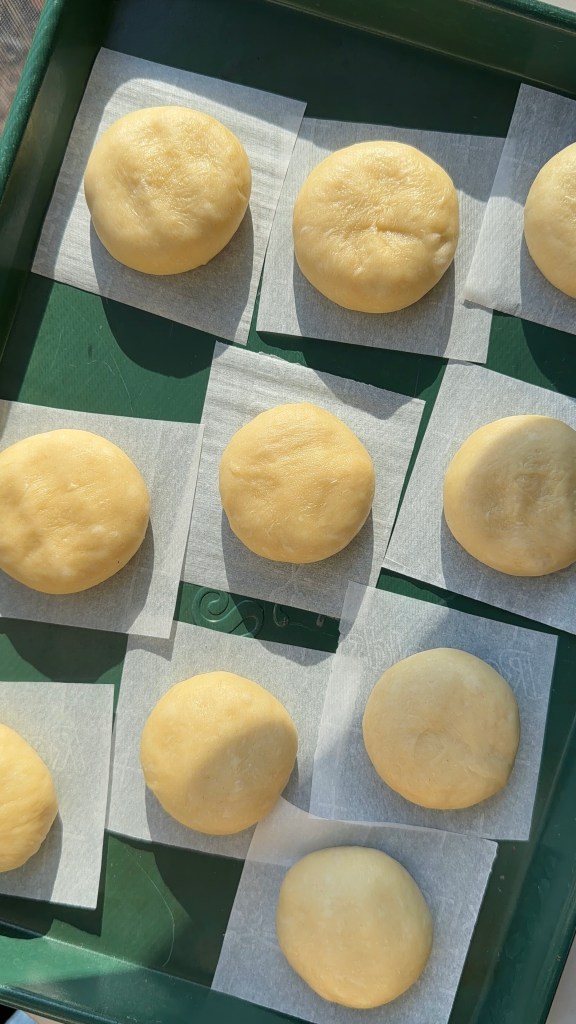

- Divide the dough into 10 pieces, then roll each piece tightly into a ball and slightly flatten them.
- Let the donuts rest, then fry them off.

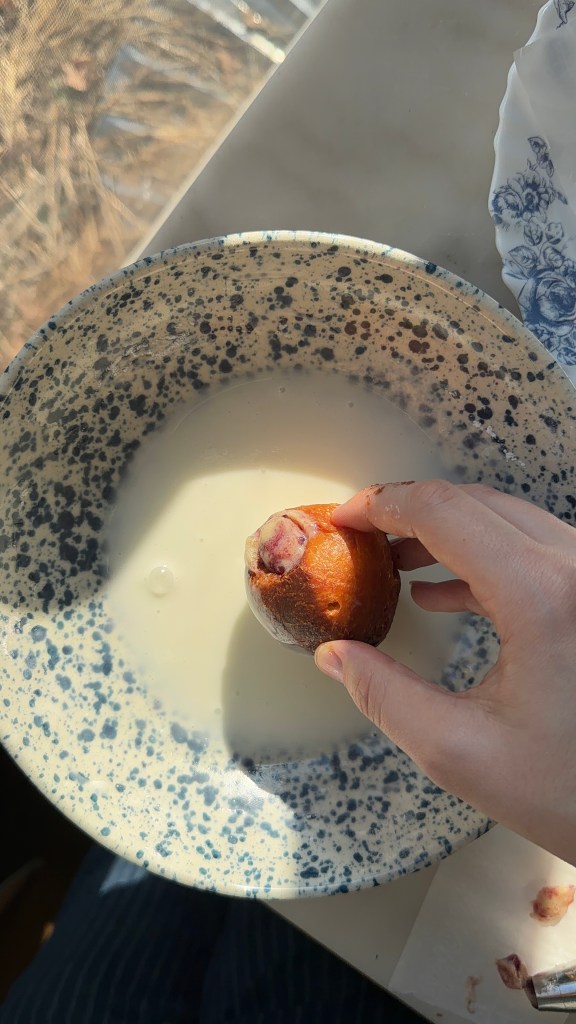
- Swirl the black currant preserves into the chilled custard, then fill the donuts with the custard-preserve mixture.
- Dip the filled donuts into the glaze, let the glaze set, then serve and enjoy!
mini black currant custard pączki recipe q&a
how to store pączki
Fried donuts are definitely going to taste the best the day that they are baked, and I highly *highly* recommend serving them on the same day. Filled, they can be stored in an airtight container for up to 2 hours at room temperature. I recommend filling them no more than 2 hours before serving so you don’t have to refrigerate them, which will change the texture a bit.
can I double this recipe?
Yes! I can’t emphasize using a kitchen scale enough for especially this recipe already, but if you are going to double or half the ingredients it is even more important that you weigh your ingredients. The dough is very hydrated and slight alterations can change the texture of the dough. I also use this same recipe to make 6 “normal” sized donuts. If you’d like to do that, divide the dough into 6 pieces instead of 10 – just note that they will likely take an additional 1-2 minutes to fry.
can I use instant yeast instead of active dry yeast?
Definitely – just pop all of the dough ingredients into your mixing bowl to start kneading! Just be sure to keep. an eye on the dough as it should double in size faster.
can I make the dough ahead of time?
Yes, and I highly recommend it! Brioche dough is a very enriched dough that can be hard to work with when warm. Simply knead the dough together, cover it, and leave it to rise in the fridge overnight.
my yeast mixture isn’t foaming, what should I do?
The mixture should start foaming around 5 minutes in. If it has not foamed after 10 minutes, the yeast is likely dead. You want to make sure that the milk temperature does not exceed 110°F / 43°C or it will kill the yeast. If you try it again and it still does not foam, the yeast you are using may be expired and you will want to purchase some more before proceeding.
why are my fried donuts hollow?
While they will still be delicious, this has happened to me and it’s definitely frustrating! This could either be that the donuts did not rise for long enough, or that you didn’t get enough air out of the dough when punching it down. Note that every environment is different and while they should only take ~60 & ~30 minutes for the first and second rise in a warm environment – it could take longer if your kitchen is on the colder side. The dough is ready once it has doubled in size!

tools and ingredients:
You can find all my favorite tools and ingredients that I use on my Amazon Storefront page, here!
other recipes you might enjoy:

did you make this recipe?
I’d love to see and know your thoughts! please leave a comment and review below, and tag me on instagram @freshbeanbakery. #freshbeanbakery
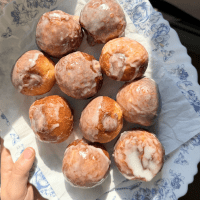
Mini Black Currant Custard Pąckzi
Ingredients
Brioche Donuts
- 80 g whole milk (⅓ c.)
- 1 tsp. active dry yeast
- 1 tbsp. granulated sugar
- 180 g bread flour (1 ½ c.)
- ½ tsp. salt
- 1 egg room temperature
- 56 g unsalted butter (4 tbsp.) room temperature
- vegetable oil for frying
Vanilla Custard
- 2 egg yolks
- 75 g granulated sugar (¼ c. + 2 tbsp.)
- ⅛ tsp. salt
- 12 g corn starch (1 ½ tbsp.)
- 240 g whole milk (8 oz.)
- 2 tsp. vanilla bean paste
- 14 g unsalted butter (1 tbsp.)
- 110 g black currant preserves (½ c.)
Glaze
- 60 g powdered sugar (½ c.)
- 1 tbsp. whole milk
Instructions
Brioche Donuts
- In a microwave safe measuring cup, heat the milk to 100°F / 38°C. Whisk in the yeast and the sugar. Set aside until the mixture begins to foam. (~5 minutes)
- While waiting, add the flour, salt, egg, and butter to the bowl of a stand mixer fitted with the dough hook attachment. When the yeast mixture begins to foam, add it in to the rest of the ingredients.
- Knead the dough on low speed for 1 minute to allow the ingredients to come together. Increase the speed to medium-high and knead for an additional 10-20 minutes, or until the dough passes the windowpane test. (This will happen after the dough has cleaned the sides and bottom of the bowl)
- Once the dough is done kneading, butter the inside of the bowl, form the dough into a ball and place it back in the bowl. Then cover the mixing bowl with plastic wrap. At this point, you could set the dough in the fridge to rise overnight, or continue with completing the recipe in one day. If doing in one day, set the dough in a warm area and wait for it to double in size (~1 hour.)
Vanilla Custard
- Start on the custard while the dough is rising. Add the egg yolks, sugar, salt, and cornstarch to a small mixing bowl. Whisk the mixture together until it turns light, pale, and fluffy. Set aside.
- Add the milk to a medium-sized saucepan set over medium heat. Stir the mixture occasionally until it comes to a simmer.
- While constantly whisking the egg mixture, slowly stream in about half of the hot milk mixture. Then, pour the egg-milk mixture back into the saucepan and put it back over medium heat.
- Constantly whisk the custard until it thickens, then whisk it for an additional minute.
- Remove the custard from the heat and pour it through a fine mesh sieve into another mixing bowl. Mix in the vanilla and 1 tbsp. of butter until the mixture is cohesive and smooth.
- Press plastic wrap directly on top of the custard, then place it in the fridge to cool until you're ready to fill the donuts.
Assembly
- Once the dough has doubled in size, punch it down to remove excess air, then transfer it to a clean, lightly floured surface.
- Divide the dough into 10 equally sized pieces (~37g each), and roll each tightly into a ball.
- Cut out 10 parchment squares that are ~3" each and place them on to a lined baking tray.
- Transfer the dough balls each to their own parchment square. Press down on each of the balls to slightly flatten them, then cover them loosely with a towel.
- Allow them to rise in a warm environment for ~30 minutes, or until they have slightly puffed up.
- Once the buns have puffed up, fill a large saucepan with at least 2" of vegetable or any neutral oil. Heat the mixture to 350°F / 175°C.
- Carefully place the donuts in to the fryer with the parchment paper (~5 at a time, depending on what your pan can fit). After ~5-10 seconds, remove carefully remove the parchment from the donuts using metal tongs.
- Fry the donuts on each side for 2 minutes, or until they are a deep golden brown. You can also check if they are done by making sure the internal temperature is at least 190°F / 87°C.
- Remove the donuts from the oil with a metal slotted spoon and set them on a wire rack to cool.
- Once the donuts have cooled to room temperature, use a sharp knife to poke a hole in the top of each donut.
- Remove the custard from the fridge and top it with dollops of the black currant preserves. Gently do a couple of big folds to swirl the preserves into the custard, then transfer the mixture to a piping bag fitted with a large round tip.
- Fill each donut generously with the custard, then make the glaze.
Glaze
- Add the powdered sugar and milk to a shallow mixing bowl and whisk until combined. Dip the tops of each of the pączki into the glaze, let the glaze set for a few minutes, then serve and enjoy!
Notes
Nutrition
Please note that the nutrition facts are only an estimate and may vary based on different brands of ingredients and any substitutions made.